 Jon Milley Creations
There’s something about picking up a craft that connects you to the people who came before you. For me, quilting is that craft, and today I took my first real steps into it.
I enrolled in Quilting: Next Level at the Anna Templeton Centre for Craft, Art & Design in St. John’s. The centre is tucked into a beautiful historic building on Duckworth Street, a not-for-profit that’s been championing craft in Newfoundland for years. I’d been there before. I took an earlier course with the same instructor where we made a tote bag and a zippered pouch, and the warm, encouraging atmosphere is a big part of why I came back.
Day One: Strips, Cuts, and the 9-Patch Block
Today’s class was all about foundations. We started by cutting our fabric into strips, then sewing those strips together into a strip set. Strip piecing is wonderfully efficient. Rather than cutting and sewing individual squares one at a time, you assemble long strips first and then crosscut them into ready-made segments. It feels almost like a cheat code once you see it in action.
From those segments we’re building toward a 9-patch block, nine squares of fabric arranged in a three-by-three grid, alternating between two fabrics. It’s one of the most classic blocks in quilting, and for good reason: it teaches you to keep seams straight, press accurately, and nest your seams so the intersections lie flat. Get comfortable with the 9-patch and you have a foundation you can build almost anything from.
One thing I appreciated: we learned both ways to make a 9-patch. The strip set method is the efficient, production-friendly approach, great when you’re making many blocks. But we also cut and sewed individual squares by hand, which is slower and more deliberate. The instructor designed it this way intentionally, so we’d understand not just how to do it, but why each method exists and when to reach for which one.
I left class with my strips cut, sewn, and ready for the next step. It’s a small thing, but holding those pieces and seeing them actually align was satisfying in a way I didn’t quite expect.
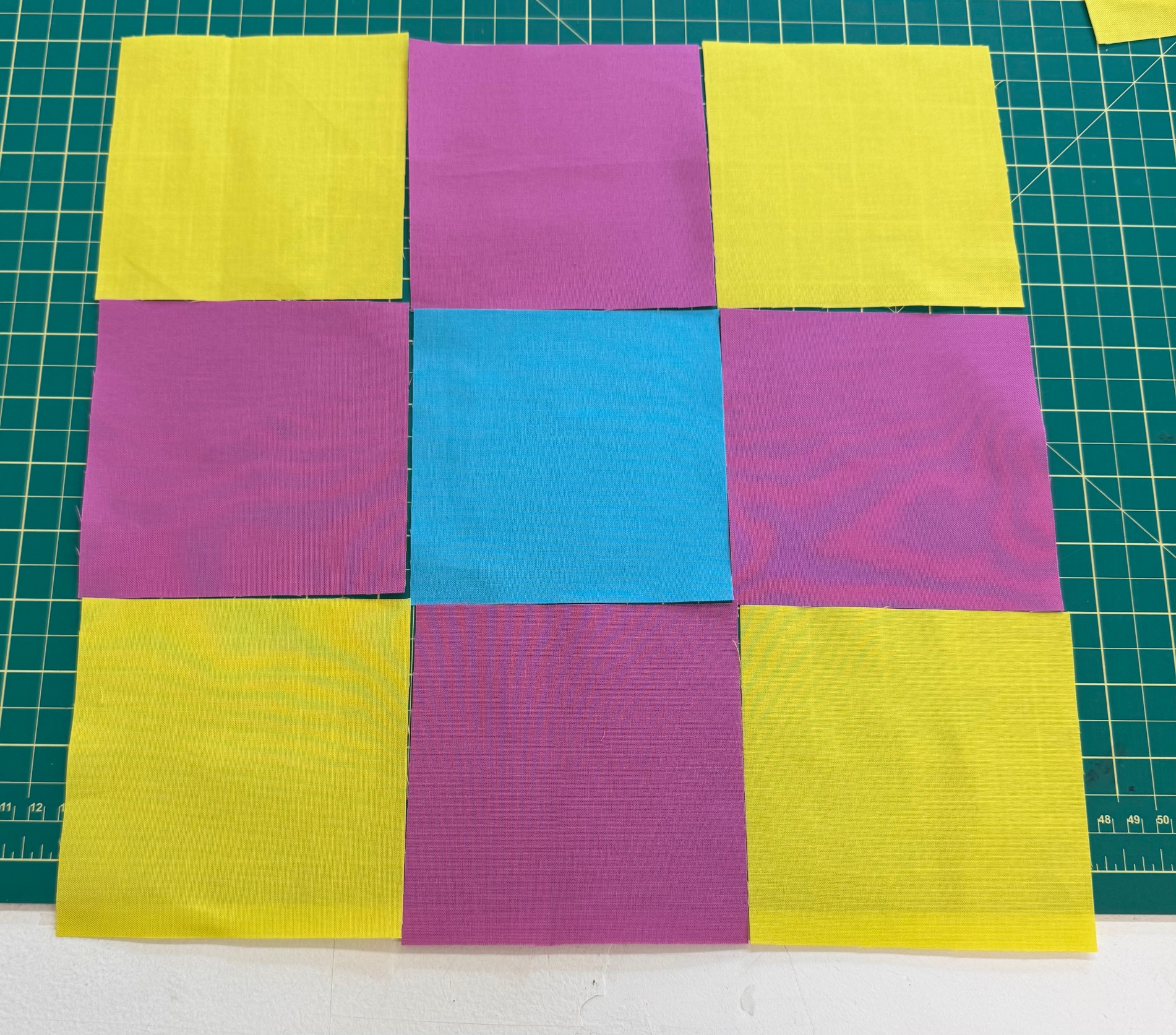
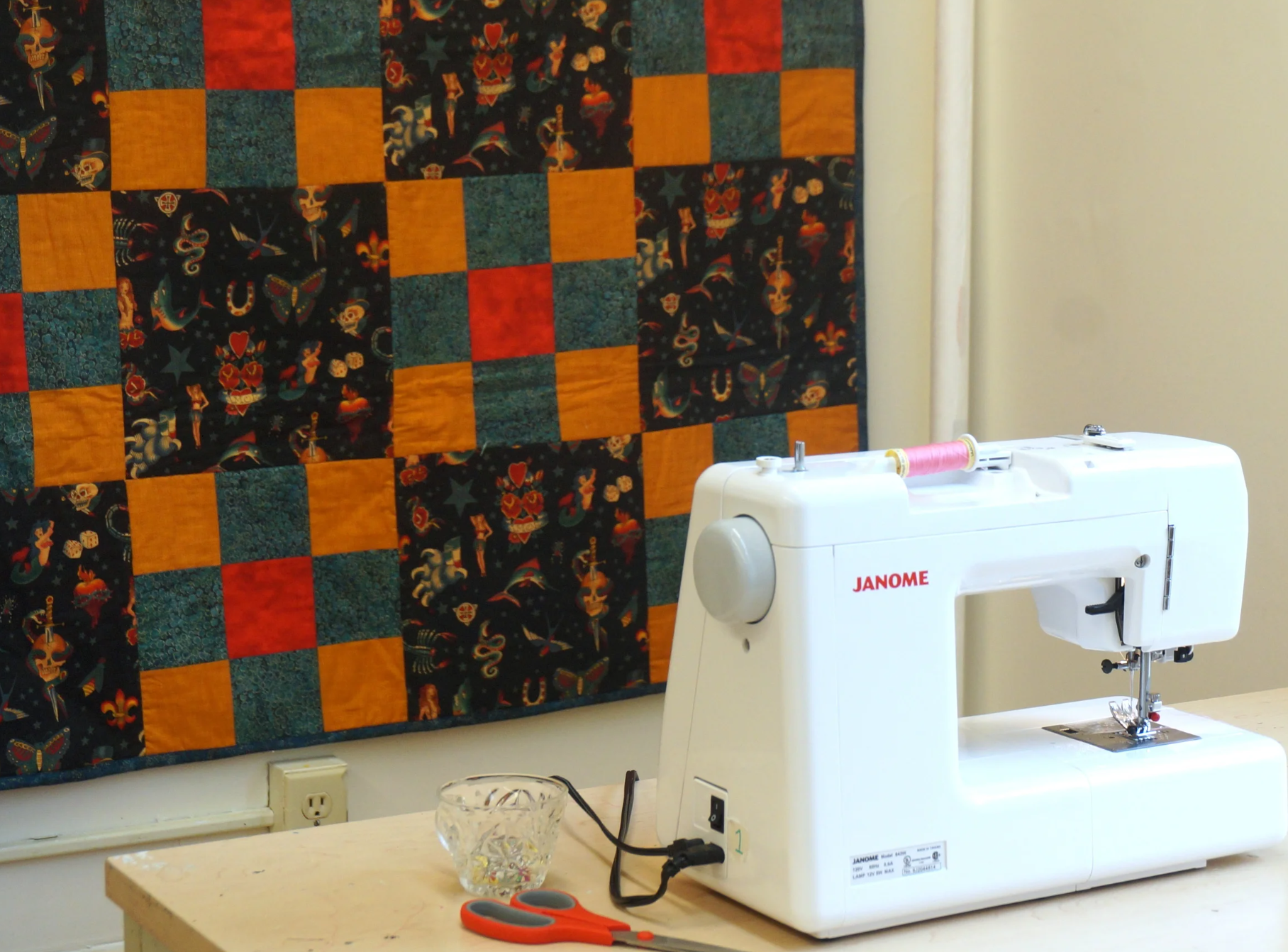
Here’s what the instructor’s finished sample quilt looks like, and where we’re headed:
Why This Matters to Me
I’m not taking this course just to learn a new hobby. There are two projects waiting for me on the other side of this learning curve, and both of them carry a weight that’s hard to put into words.
My Mother’s Quilt
My late mother nearly finished a quilt. It’s a classic block pattern with a border, and she got so close. It just needs to be quilted. For years it’s sat waiting, almost done, a project she never got to complete.
I want to finish it for her. Learning to quilt properly, understanding tension and batting and how to move a quilt through a machine or by hand, means I’ll be able to do it right. It deserves to be done right.
My Grandmother’s Embroidery
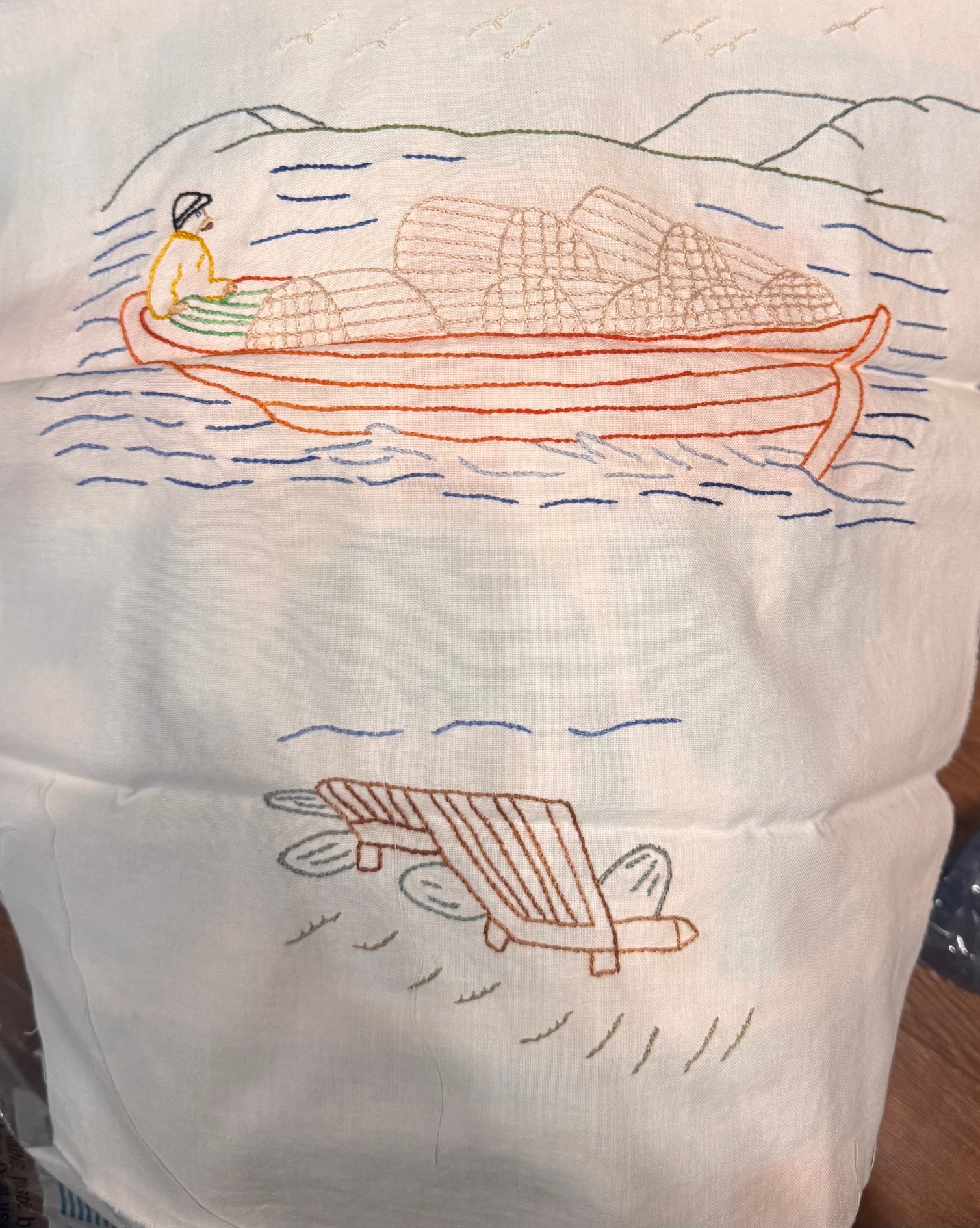
My grandmother was a skilled hand embroiderer, and before she passed she created a collection of pieces depicting Newfoundland scenes: lighthouses, fishing boats, puffins, moose, the landscapes and wildlife of this place we call home. They are beautiful, and they deserve to be seen.
My plan is to incorporate them directly as quilt blocks, setting her embroideries into a larger quilt design. Before they go in, I’ll interface them, a layer of fusible backing that stabilizes the fabric and protects all that careful hand stitching from the stress of being worked into a quilt. It’s a way of honouring the work she put into each piece while giving them a new life as something you can wrap around yourself on a cold Newfoundland evening.
Looking Forward
I’m excited about where this goes. Not just for the technique, though I do want to feel genuinely confident taking on my own projects, but for what’s possible once I have the skills. A quilt made from my grandmother’s embroidered puffins and lighthouses. My mother’s quilt, finally finished.
There’s a long tradition of quilting in Newfoundland, of women sitting together and turning scraps of fabric into something lasting and beautiful and warm. I feel like I’m just starting to understand what that means.
More updates as the course progresses.